2018 Annual Report
Innovation & Business Services
Focused on developing a culture of innovation, the Water Authority added value for ratepayers and member agencies on all fronts during the fiscal year. The Board adopted some of the lowest rate increases in more than a decade, in part because supplies from the Colorado River Quantification Settlement Agreement are now less costly – and more reliable – than water from the Metropolitan Water District. Across its core services, the agency embraced new approaches and technologies to ensure continued efficiencies and cost-effective approaches to everything from investment strategies and pipeline management to right-of-way assessments and billing. Those initiatives were complemented by agency-wide advances in cyber-security and a continued commitment to clean energy solutions.
-
Rate Increases Among the Lowest in 15 Years
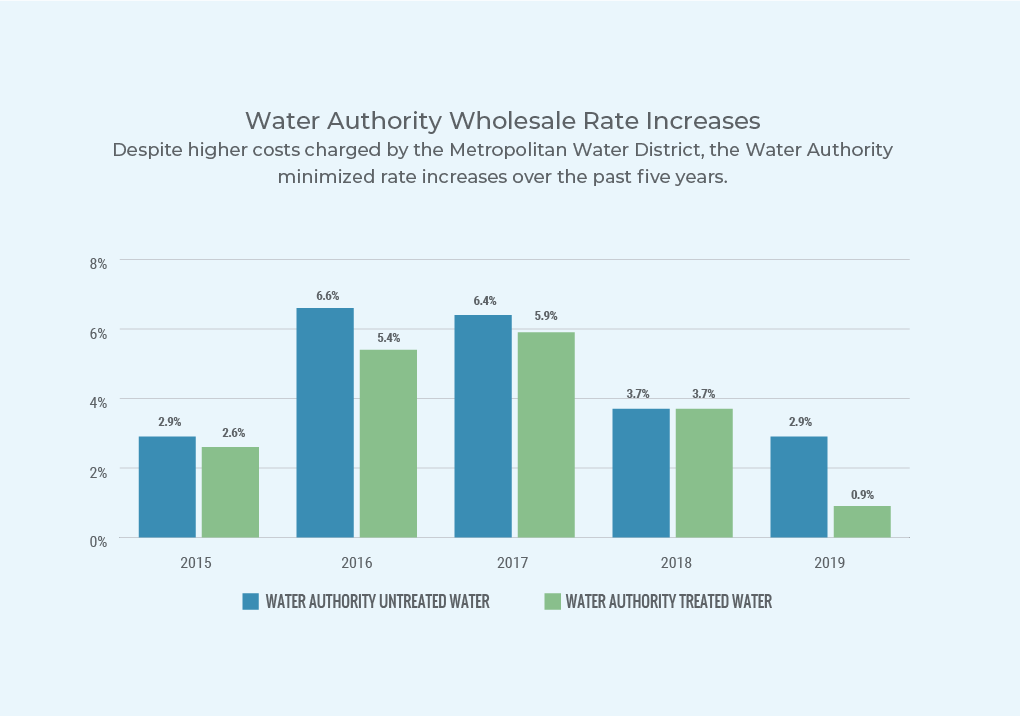
Rate increases for 2019, adopted by the Board in June, are among the smallest in 15 years due to financial benefits secured through litigation against the Metropolitan Water District of Southern California and the Water Authority’s planned use of its Rate Stabilization Fund. Several other factors also were at play: Regional water demand projections remained below earlier forecasts; deliveries of Colorado River water from Imperial Irrigation District will continue increasing; and MWD-related costs were lower because of a 2017 Court of Appeal ruling that favored the Water Authority on several key points. Prudent financial management also played a role. For 2019, the Water Authority planned a draw about of $18.4 million from its Rate Stabilization Fund, which was created in 1990 to help avoid rate spikes. Rates charged to the Water Authority’s 24 member agencies increase by 0.9 percent for treated water and 2.9 percent for untreated water in calendar year 2019.

-
QSA Water is Less Costly, More Reliable than MWD Supplies
The rate-setting process for 2019 highlighted a key long-term accomplishment for the region: Starting in 2018, the Water Authority’s independent water supplies from the Colorado River were less expensive than supplies from the Metropolitan Water District of Southern California – and the cost difference will continue to grow in the years ahead. The landmark 2003 Colorado River Quantification Settlement Agreement allowed the Water Authority to transfer increasingly large amounts of conserved water from the Imperial Valley to San Diego. From the start, that water has been more reliable because it has a higher priority on the Colorado River. The cost of that water is linked to the rate of inflation, which means it is rising far more slowly than MWD’s rates and charges. In addition, the Water Authority started benefitting from lawsuits that forced MWD to drop millions of dollars a year in illegal charges for delivering the Water Authority’s independent Colorado River water.
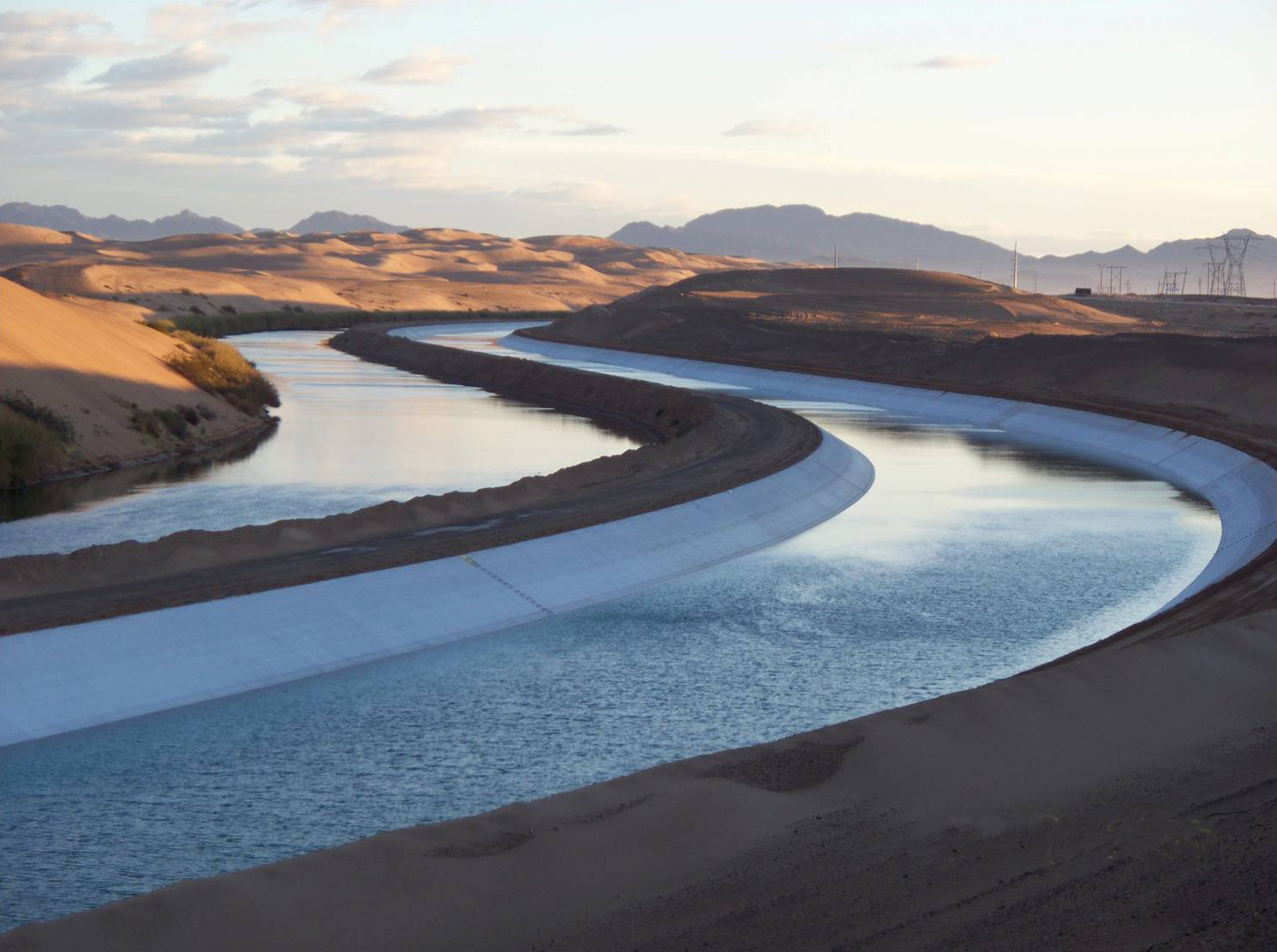
Lining the All-American Canal in the Imperial Valley conserved water for transferring to San Diego County as part of the Colorado River Quantification Settlement Agreement of 2003. -
Major Upgrade Started on Water Billing System
A multi-department task force formed in the spring to lead a major upgrade of the Water Authority’s water billing software used to generate monthly invoices for member agencies, along with replacement of the information management system that archives key historical planning-related data such as water deliveries, water use and reservoir storage. Staff from the Water Resources, Finance, and Administrative Services departments started collaborating on efforts to modernize legacy software deployed in 1996. The new Data Archival and Invoicing System will include an intuitive user-interface, an on-line member agency portal, and a robust set of reporting tools. Work started in June with evaluation of the existing systems. The new applications are expected to be fully operational in 2020.
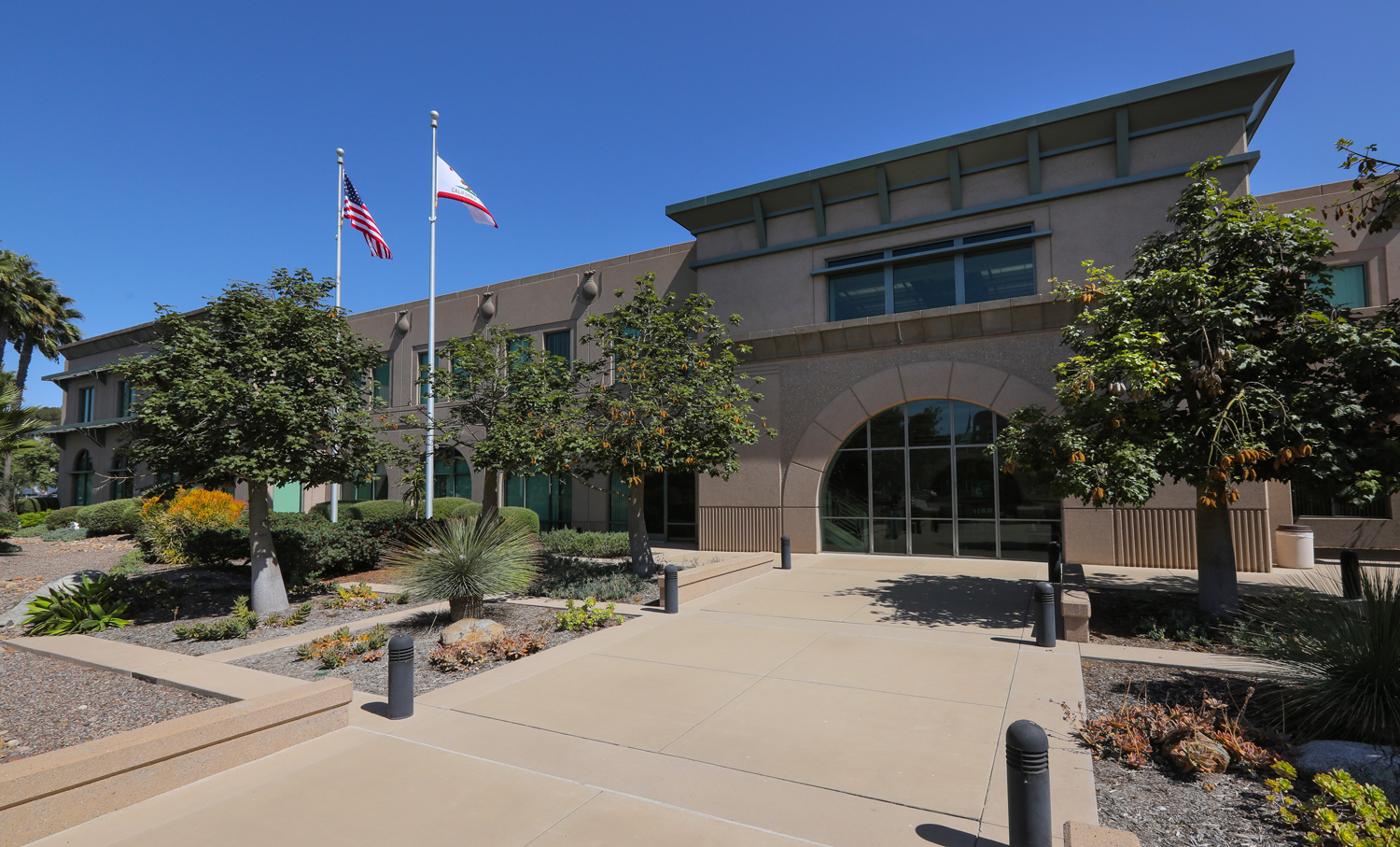
Water Authority headquarters in Kearny Mesa. -
Innovation Program Expands, Promotes Continual Improvement
The Water Authority’s Innovation Program expanded significantly during 2018 to capitalize on internal and external ideas for managing the region’s water supplies and improving long-term stewardship of the region’s most precious natural resource. In October, the agency announced the winners of its first Bright Ideas of the Year competition, which drew more than 80 entries from across all departments. Winning ideas included forming an employee Health and Wellness Committee and installing fiber optic lines during pipeline relining projects to streamline the installation process. The Water Authority also expanded outreach to external stakeholders with increased participation in water industry and business innovation forums and the creation of a new web portal for entrepreneurs and others to submit their ideas online.
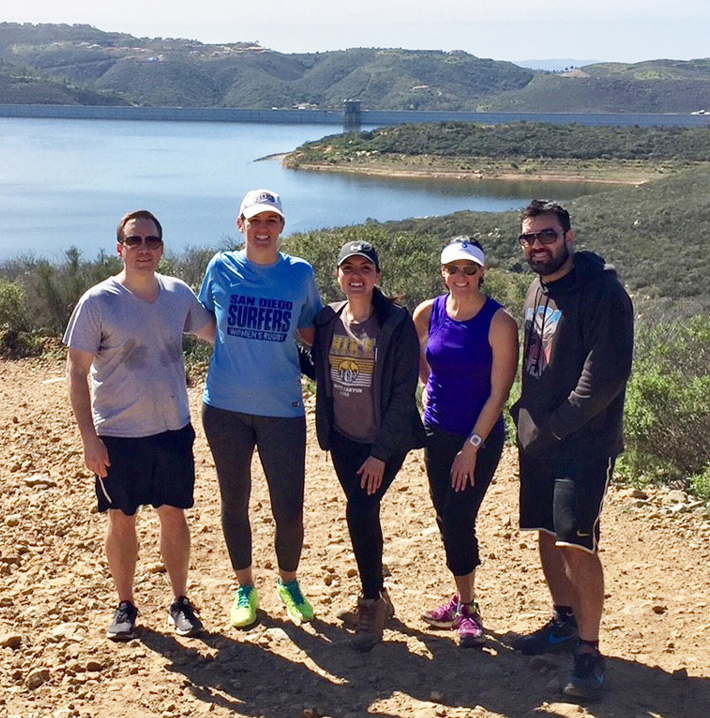
Ideas generated through the Water Authority's expanded Innovation Program included forming an employee Health and Wellness Committee. -
City of San Diego, Water Authority Explore Potential Joint Energy Project
In December, the Water Authority and the City of San Diego began negotiations with a private developer to assess the potential of developing a major energy storage facility at San Vicente Reservoir near Lakeside. The project would leverage existing water and energy infrastructure to reduce upward pressure on water rates while also expanding the potential for renewable energy use across the region. It would do so by creating a closed-loop system connecting San Vicente Reservoir to a smaller new reservoir that would be built at a higher elevation nearby. Energy would be generated by water moving through turbines from the upper reservoir to the lower reservoir. The region would benefit from the system’s ability to serve as a giant battery, an increasingly important asset given the growing renewable energy market. A primary goal of the project would be to offset water-related costs for the joint project partners – the Water Authority and the City of San Diego – in exchange for the use of public land, water and other assets.
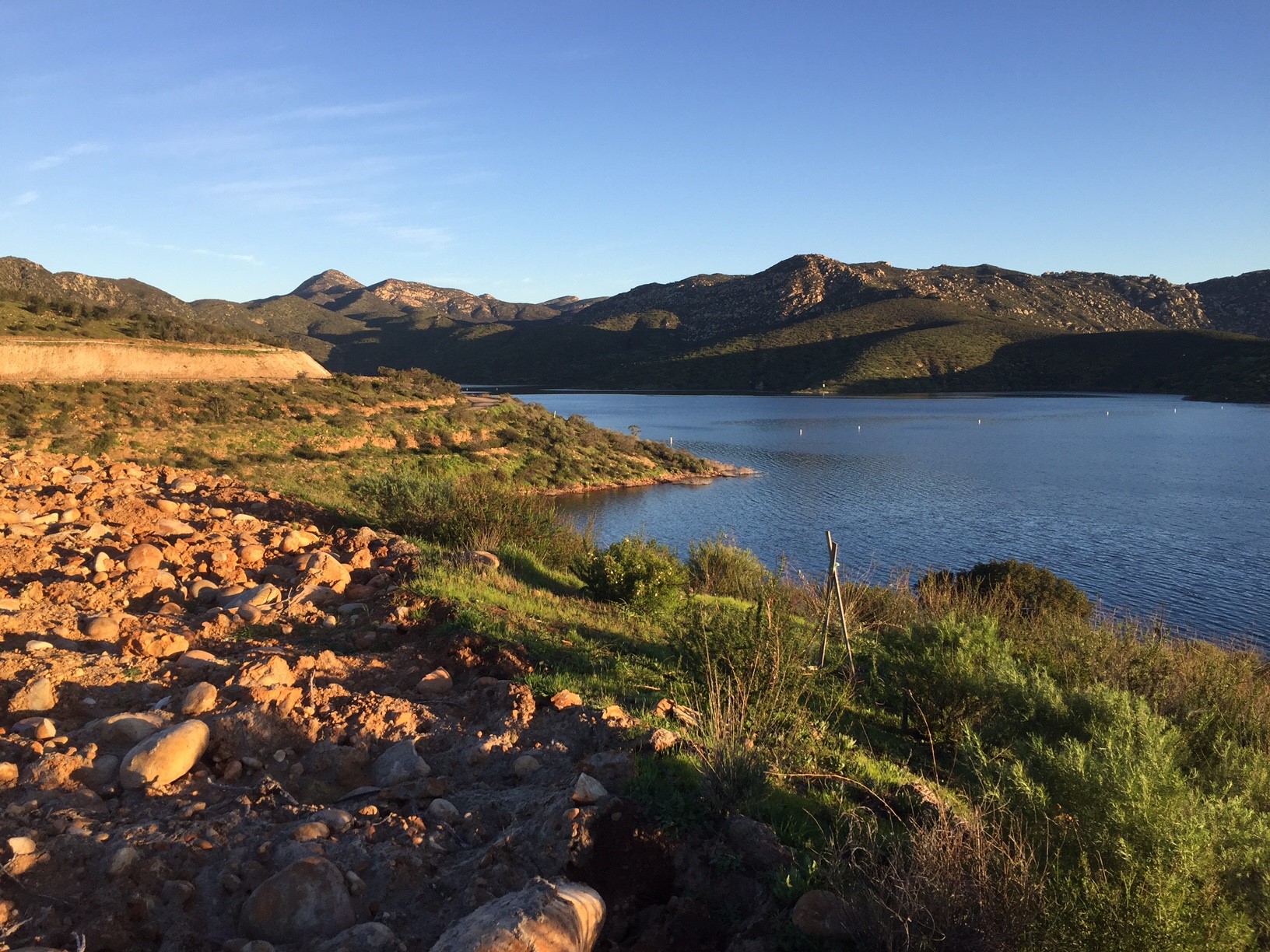
The Water Authority and the City of San Diego continued pursuing a potential energy storage facility at San Vicente Reservoir. -
Agency Staff Develops 360-Degree Technology for Pipeline Inspections
Using off-the-shelf, professional-grade cameras, Asset Management staff fabricated a device that provides high-resolution video imagery inside large-diameter pipelines. Images from multiple cameras can be stitched together to offer 360-degree views of pipeline interiors for assessing hard-to-reach sections. The Water Authority examines more than 20 miles of pipelines each year, however, several miles of pipeline are in extremely steep terrain and past inspections required support from specialized companies. By minimizing dependence on contractors, the video tool paid for itself in just two days of use after being first deployed in December. In addition, 360-degree videos can be paired with off-the-shelf virtual reality goggles to provide an experience like being inside a pipeline – an advance that allows stakeholders at the Citizens Water Academy and elsewhere to get an inside view of pipelines and the Water Authority’s innovative Asset Management Program.
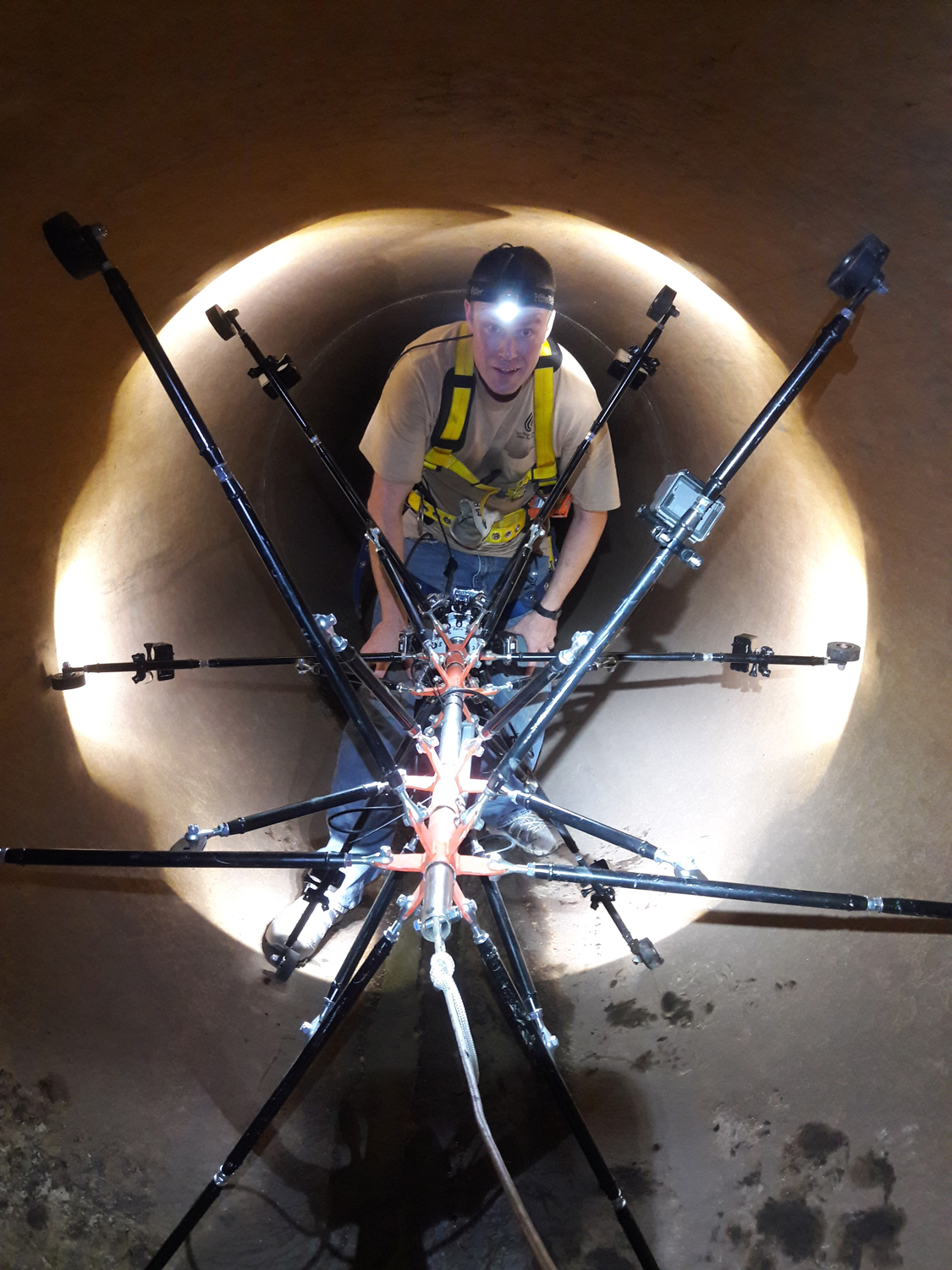
Using off-the-shelf cameras, Water Authority staff developed a pipeline inspection system that improves access to hard-to-reach areas. -
Drones Advance Assessments of Inaccessible Areas
The Engineering Department expanded the use of aerial drones to monitor rights of way and help with surveying inaccessible landscapes. Assessment of the technology included hiring a consultant in November to obtain drone images and video of steep terrain on the Second Aqueduct west of Interstate 15 and south of the San Luis Rey River. The drone provided images that were 10 times higher resolution than stock aerial images without exposing staff to potentially dangerous conditions, prompting the Water Authority to explore drones for future surveys and use by other departments.
Drones are helping the Water Authority monitor rights of way, particularly in areas of rugged terrain. -
Water Authority Promotes Leak-Detection Efforts Nationwide
As part of its pioneering approach to pipeline asset management, the Water Authority co-sponsored a nationwide contest in Spring 2018 to advance leak- and corrosion-detection technologies for large-diameter pipelines. Water loss from leaks and corrosion is a major problem across the country, resulting in billions of gallons of water wasted annually, disruptions in water service, and costly repairs. The competition, which ended in May, included a $75,000 purse provided by the U.S. Bureau of Reclamation, the nation’s largest water provider and the operator of more than 20,000 miles of buried water pipelines. Unaccounted water loss (such as leaks) is less than 1 percent in the Water Authority’s system, far less than the industry average. The Water Authority helped design the competition and provided judges to identify the most promising approaches. Winners had not been announced.
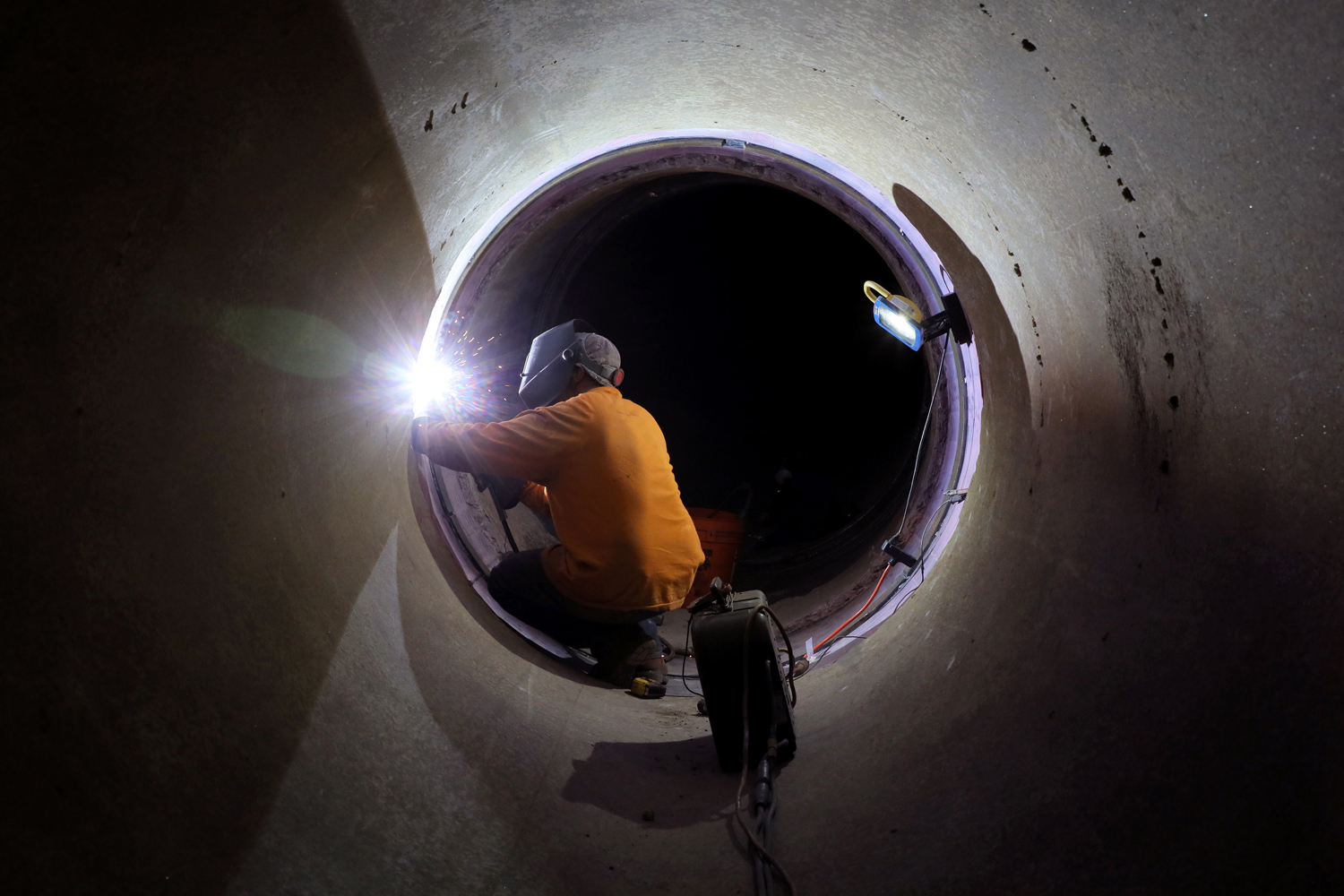
The Water Authority's pioneering Asset Management Program has reduced the agency's water loss due to leaks well below the national average. -
Clean Energy Storage System Installed at Twin Oaks
Commercial-scale batteries installed at the Twin Oaks Valley Water Treatment Plant near San Marcos are expected to save the Water Authority about $100,000 annually. The 1 megawatt/2 megawatt-hour energy storage system was designed to reduce operational costs at the treatment facility by storing low-cost energy for use during high-demand periods when energy prices increase. The batteries were installed at no charge to the Water Authority as part of an agreement with Santa Clara-based ENGIE Storage. The system charges from either the grid or onsite solar energy, which is generated by more than 4,800 existing solar panels at the Twin Oaks facility.
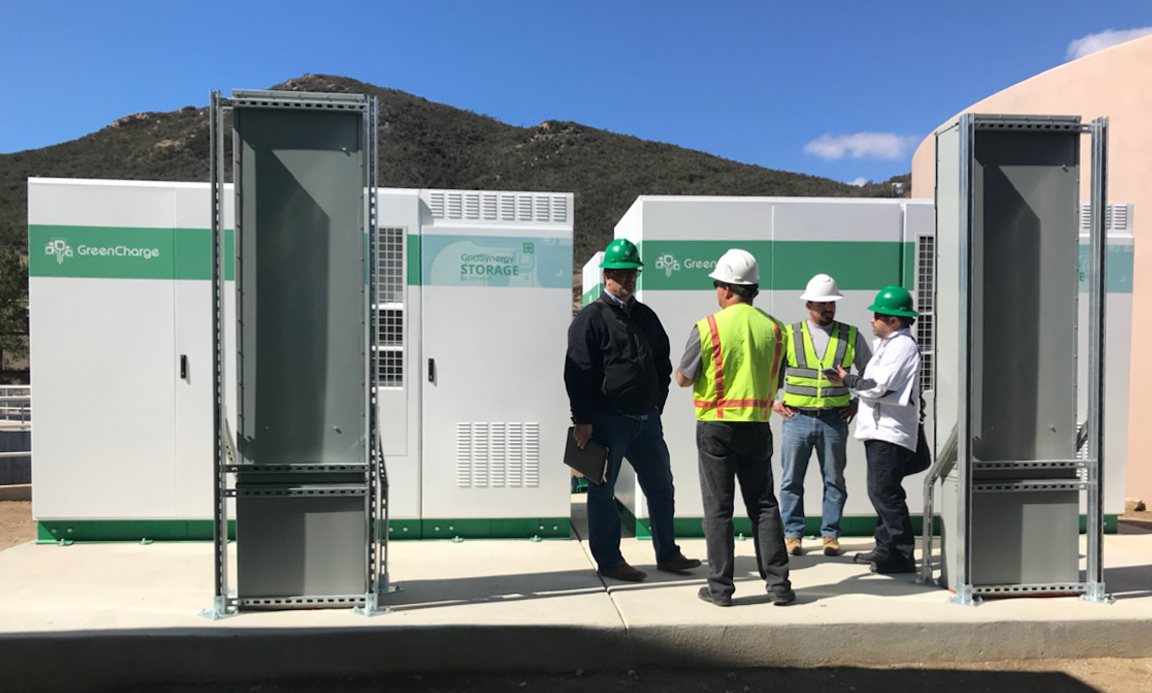
Energy storage using commercial-scale batteries is one way the Water Authority shows commitment to green technologies. -
Going Green with Electric Vehicle Charging Stations
Electric vehicle charging stations installed at the Water Authority’s Kearny Mesa headquarters helped the agency continue to advance is sustainability initiatives. Situated near the northeast vehicle exit gate, the stations offer electric vehicle charging at one handicap space and six standard parking spaces. San Diego Gas & Electric began installing the charging stations in February, and they started operating in April at no cost to the Water Authority or its ratepayers thanks to SDG&E’s Power Your Drive program.
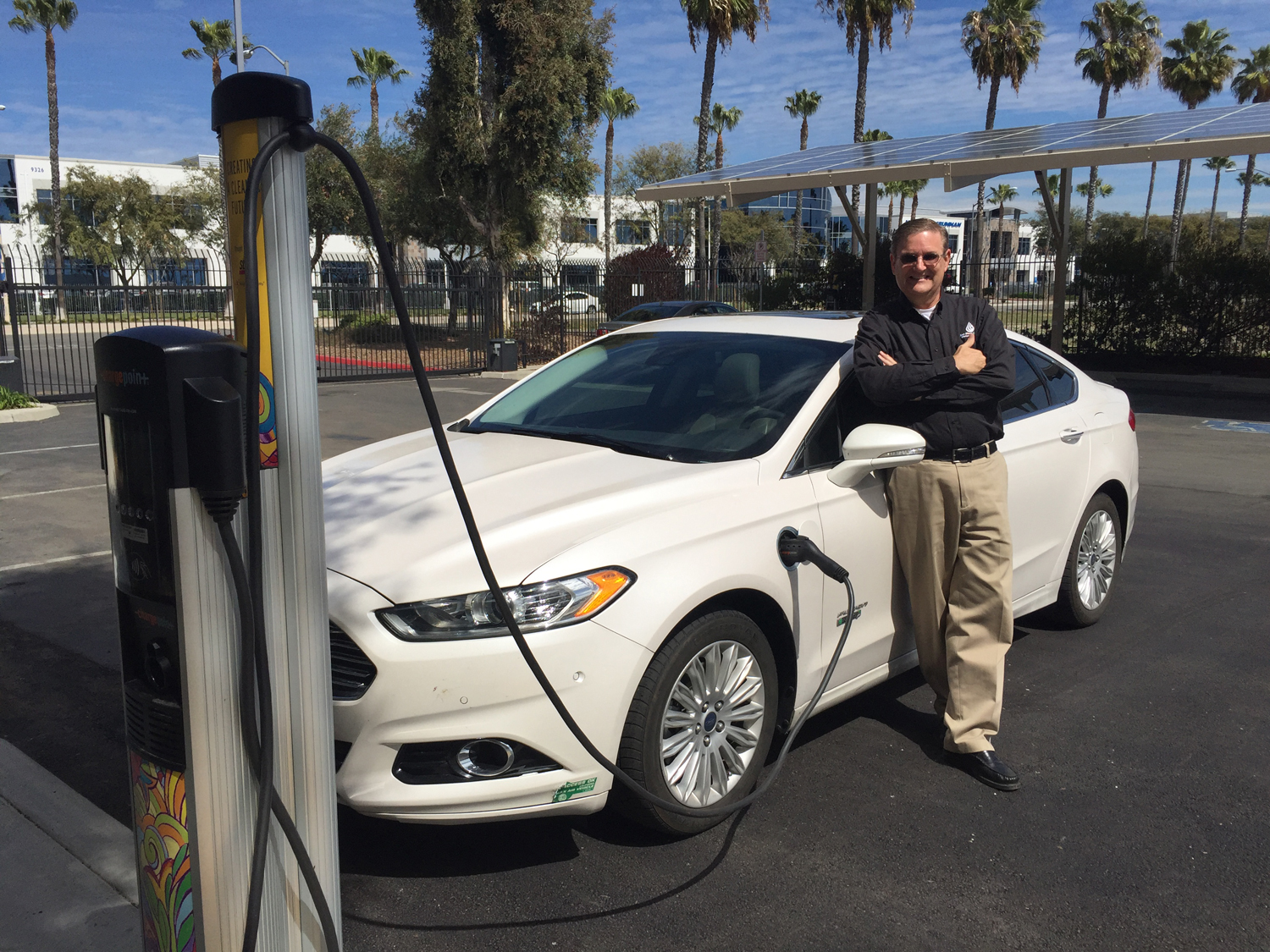
Electric car charging stations at the Water Authority's Kearny Mesa headquarters were installed at no cost to the agency. -
Proactive Efforts Upgrade Cyber-Security
Growing international cyber-security threats prompted additional agency-wide improvements to cyber defenses, from enhanced security awareness training for employees to back-end initiatives that address the continually evolving online risks. The Water Authority hired its first dedicated information security analyst in May, adopted new security patching software, bolstered vulnerability scanning and event tracking capabilities, and prepared to launch a multi-factor authentication system for accessing agency accounts.
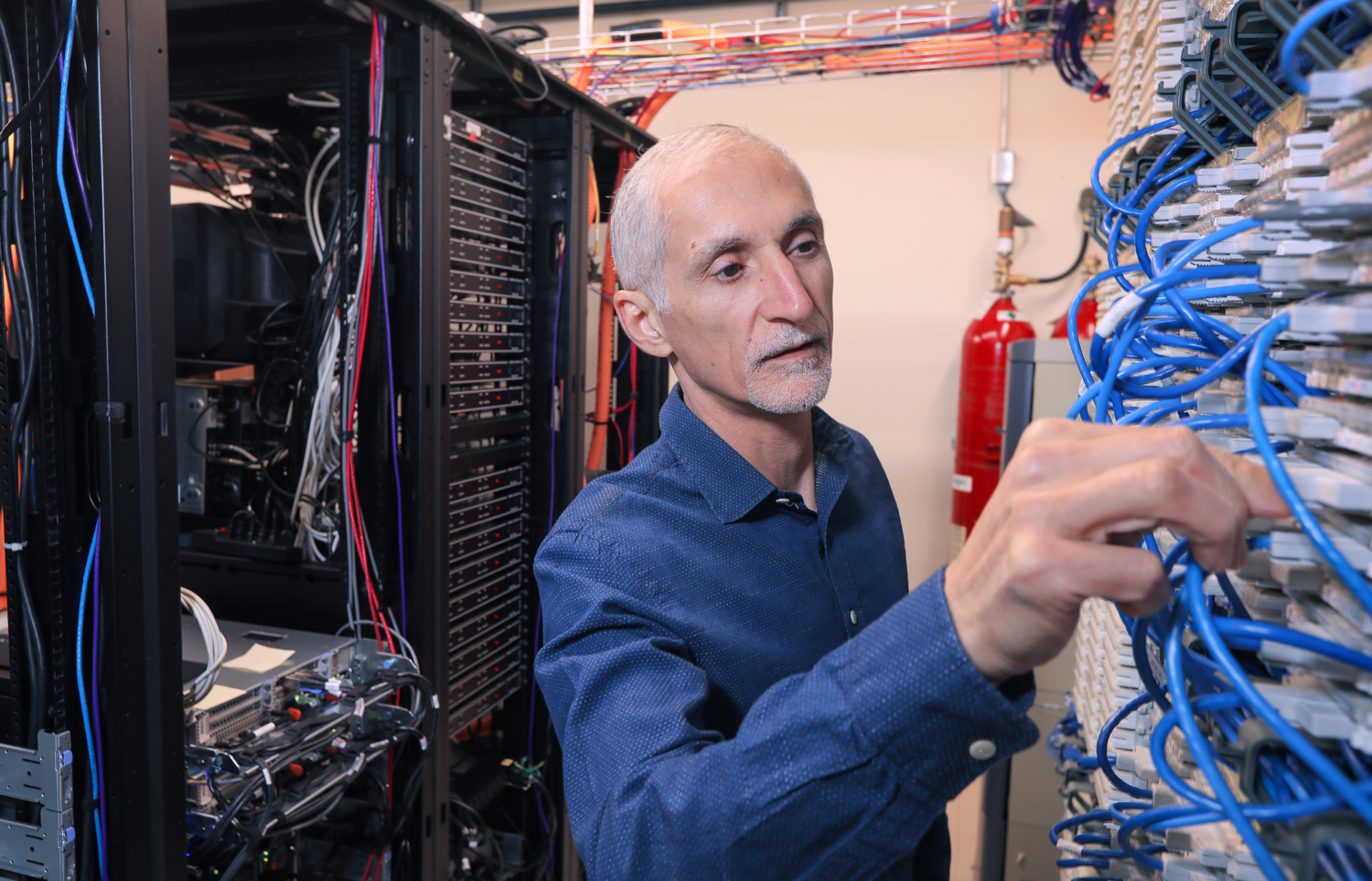
The Water Authority's Information Systems team is expanding cyber-security measures to stay ahead of ever-evolving threats. -
Consultant Takes Leading Role in Investment Strategy
When the Board of Directors adopted an updated investment policy in December, it also expanded the role of Chandler Asset Management to implement the updated strategy. Chandler, a top-rated private investment firm based in San Diego, already was under contract to manage medium-term corporate notes and municipal securities. As directed by the Board, the company took over management of the Water Authority’s core portfolio using asset classes within the investment policy. By taking full advantage of the investment types permitted by the state and emphasizing high credit quality, Chandler diversified the Water Authority’s investment portfolio with the goal of enhancing long-term returns while maintaining safety and liquidity.
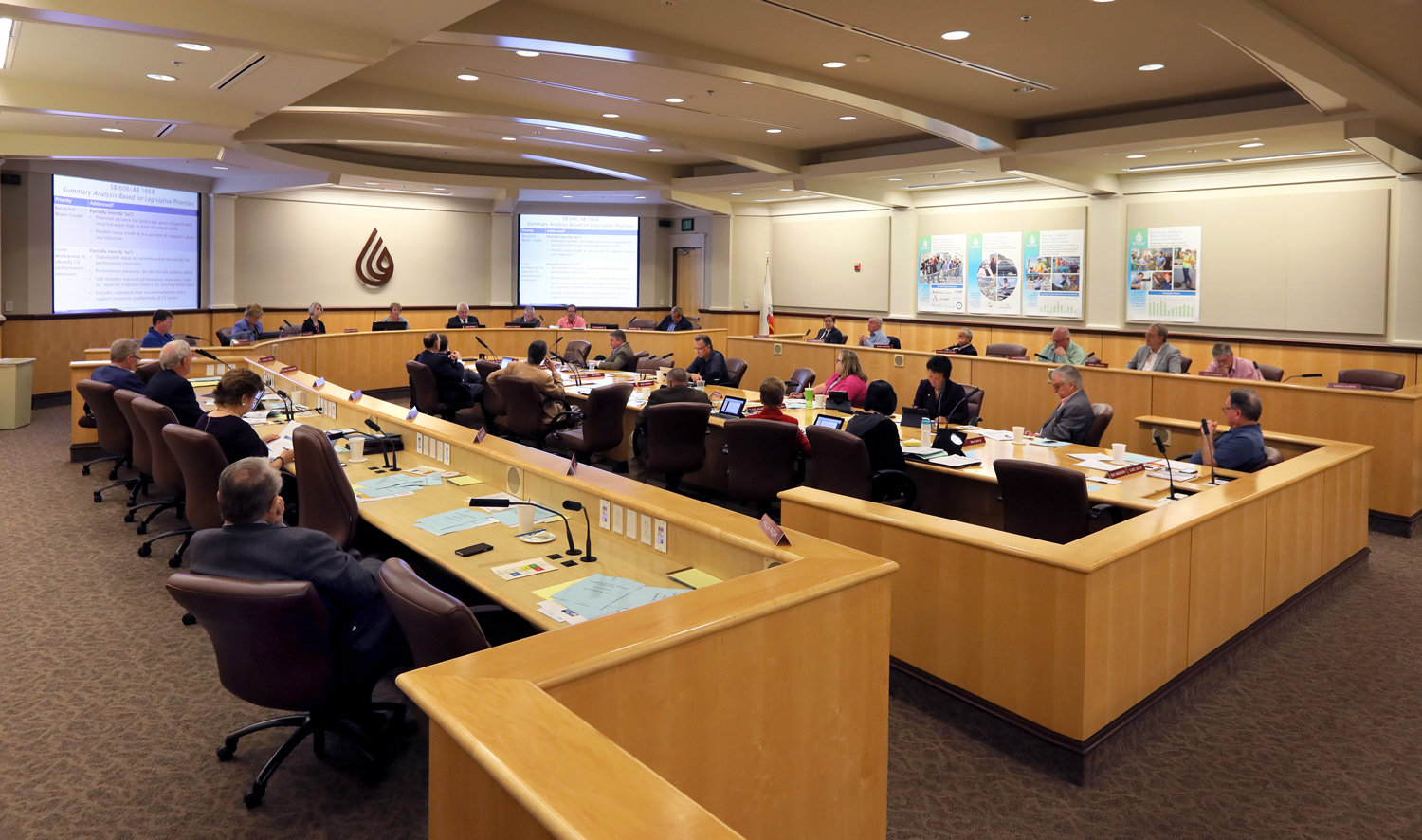
The Water Authority's Board of Directors. -
Insurance Review Saves Ratepayers Nearly $1 Million
As the Water Authority wound down its successful, owner-controlled insurance program for the Emergency & Carryover Storage Project, the agency negotiated savings of nearly $1 million with the program insurance carrier, Liberty Mutual. In November, Liberty Mutual agreed to reduce the Water Authority’s financial commitment from $2.2 million to $1.3 million and returned $900,000 to the agency. The program remains funded to meet obligations, and the savings were freed up for other Water Authority needs.
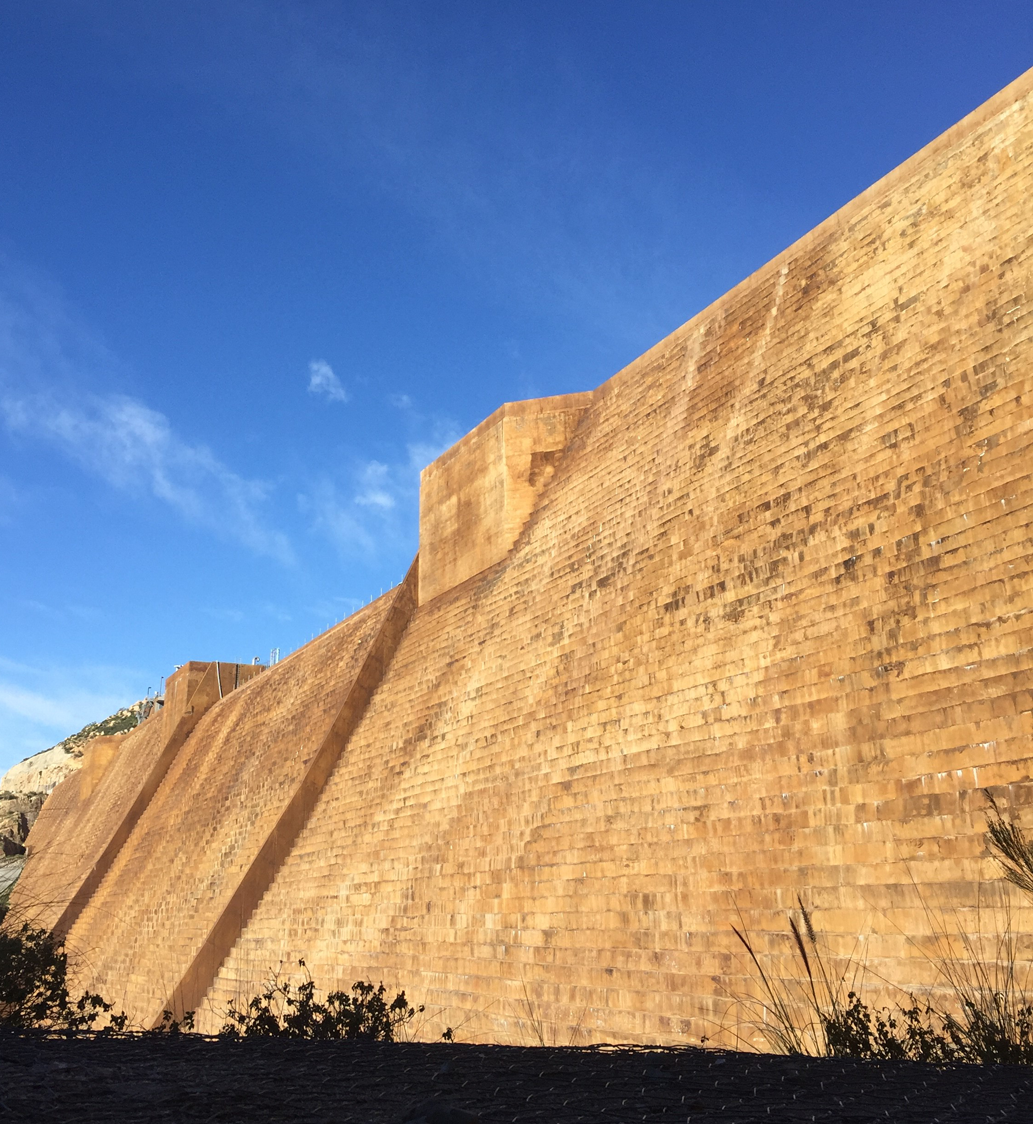
Ratepayers benefitted from an insurance review of the Emergency & Carryover Storage project that saved nearly $1 million. -
Water Authority Earns Awards for Excellence
Awards
Certificate of Achievement for Excellence in Financial Reporting for the Comprehensive Annual Financial Report for Fiscal Year 2017
Government Finance Officers AssociationDistinguished Budget Presentation Award for the Biennium Beginning July 1, 2017
Government Finance Officers AssociationOperating Budget Excellence Award for Fiscal Year 2018
California Society of Municipal Finance OfficersAchievement of Excellence in Procurement Award for 2017
National Procurement Institute -
Financial Statements
Statements of Revenues, Expenses, and Changes in Net Position
For the Fiscal Years Ended June 30, 2018 and 2017
2018 2017 Operating Revenues Water Sales $591,809,280 $579,057,028 Other revenues 4,053,221 3,727,332 Total Operating Revenues 595,862,501 582,784,360 Operating expenses Cost of sales 442,369,171 430,560,992 Operations and maintenance 24,219,304 19,097,518 Planning 9,179,960 9,040,200 General and administrative 16,914,642 14,487,899 Depreciation and amortization 62,842,596 67,086,517 Total Operating Expenses 555,525,673 540,273,126 Operating Income 40,336,828 42,511,234 Nonoperating revenues (expenses) Property taxes and in-lieu charges 13,753,714 12,913,313 Infrastructure access charges 32,482,290 31,144,704 Investment income 4,342,461 2,237,947 Other income 19,253,393 11,408,632 Intergovernmental 10,665,858 11,452,308 Gain (Loss) on sale/retirement of capital assets 131,308 (727,294) Interest expense (99,915,662) (95,533,730) Debt issuance costs (227,212) (352,544) Other expenses (39,453,750) (17,143,705) Total nonoperating revenues (expenses) (58,967,600) (44,600,369) Income before capital contributions (18,630,772) (2,089,135) Capital contributions Capacity charges 28,153,768 21,080,540 Water standby availability charges 11,102,611 11,091,285 Contributions in aid of capital assets 16,000 219,325 Total capital contributions 39,272,379 32,391,150 Changes in net position 20,641,607 30,302,015 Net position at beginning of year, as restated 1,556,316,102 1,526,014,087 Net position at end of year $1,576,957,709 $1,556,316,102 Statements of Net Position
June 30, 2018 and 2017
2018 2017 Assets Current Assets Cash and investments $104,682,066 $56,840,335 Restricted cash and investments 119,984,952 149,126,977 Water receivables 106,982,874 102,593,505 Interest receivable 1,112,444 918,016 Taxes receivable 1,026,196 1,153,812 Other receivables 19,833,613 13,731,984 Inventories 96,334,231 96,983,153 Prepaid expenses 4,649,883 4,640,248 Total current assets 454,606,259 425,988,030 Noncurrent assets Cash and investments 107,746,039 135,072,833 Restricted cash and investments 22,665,917 23,411,934 Advances to other agencies 217,594 650,477 Retention receivable 1,245,470 823,942 Long-term loan receivables 19,174,304 20,000,000 Net OPEB asset 795,852 - Capital assets Non-Depreciable 118,295,114 151,945,443 Depreciable 3,346,284,374 3,325,243,161 Total noncurrent assets 3,616,424,664 3,657,147,790 Total assets 4,071,030,923 4,083,135,820 Deferred outflows of resources Deferred loss on refunding 61,113,716 72,294,728 Pension contributions subsequent to measurement date 4,240,681 16,163,814 OPEB contributions subsequent to measurement date 366,591 324,982 Deferred actuarial amounts related to pensions 12,733,072 8,560,959 Deferred actuarial amounts related to OPEB 84,422 275,965 Total deferred outflows of resources 78,538,482 97,620,448 Liabilities Current liabilities Accounts payable and other liabilities 104,266,238 85,111,259 Interest payable 20,430,541 20,806,003 Construction deposits 362,845 429,144 Short-term liabilities 345,000,000 345,000,000 Current portion of long-term liabilities 54,165,278 57,293,370 Total current liabilities 524,224,902 508,639,776 Noncurrent liabilities Long-term liabilities 1,975,170,555 2,041,933,667 Net pension liability 70,106,317 71,135,027 Net OPEB liability - 170,141 Total noncurrent liabilities 2,045,276,872 2,113,238,835 Total liabilities 2,569,501,774 2,621,878,611 Deferred inflows of resources Deferred actuarial amounts related to pensions 2,528,360 2,561,555 Deferred actuarial amounts related to OPEB 581,562 - Total deferred inflows of resources 3,109,922 2,561,555 Net postion Net investment in capital assets 1,154,718,703 1,123,928,892 Restricted for construction projects 119,984,952 147,352,064 Restricted for debt service 377,929 235,337 Unrestricted 301,876,125 284,799,809 Total net position $1,576,957,709 $1,556,316,102 Cash and Investments
June 30, 2018 and 2017
2018 2017 As of June 30, 2018 and 2017, restricted cash and investments balances were as follows Construction $ - $2,663,522 Debt Service Reserve 22,665,917 22,523,325 Pay-As-You-Go 119,984,952 147,352,064 Total $142,650,869 $172,538,911 As of June 30, 2018 and 2017, unrestricted cash and investments balances were as follows Operating $56,369,103 $55,645,254 Designated for Rate Stabilization 155,139,512 135,072,833 Designated for Equipment Replacement 919,490 1,195,081 Designated for Stored Water - - Total $212,428,105 $191,913,168 Total Cash Unrestricted 60.0% 53.0%