2018 Annual Report
Diversification & Conservation
California and much of the West endured hot and dry conditions during the fiscal year – a reminder of the importance of continued investments in supply reliability and efficiency. The Water Authority has been working for decades to ensure that the San Diego region isn’t vulnerable to the vagaries of weather or long-term climatic shifts – and this year was no exception. Highlights included securing deliveries of independent, high-priority water conserved by the Imperial Irrigation District through 2047. The Water Authority also updated its plans to ensure proactive management of drought conditions, revised long-term demand forecasts to reflect diminished water use, and showcased environmentally friendly landscaping in a new demonstration garden.
-
Water Supplies Sufficient Despite Hot, Dry Weather
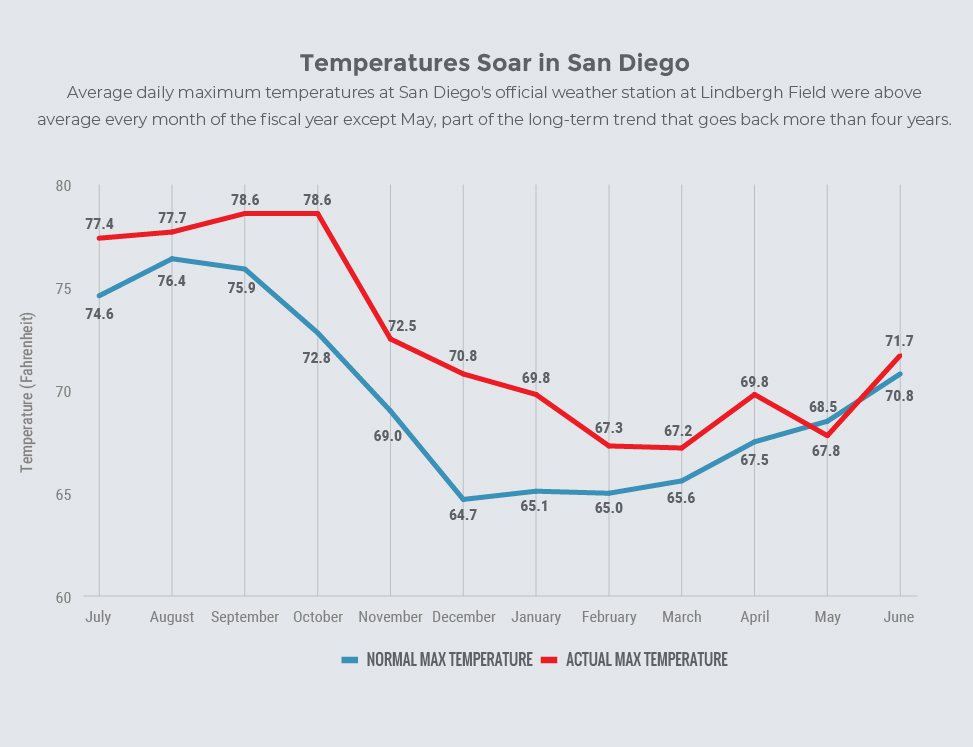
The Water Authority’s diversified supply portfolio continued to meet the region’s needs during the fiscal year despite sparse rain and snow statewide along with an uptick in the economy that put upward pressure on water demand. In addition, 11 of 12 months of the year were hotter than average at Lindbergh Field. San Diego County benefited from drought-resilient resources such as the Claude “Bud” Lewis Carlsbad Desalination Plant, which provides about 50 million gallons of drought-proof water a day, along with conservation-and-transfer contracts for high priority water from the Colorado River. Sufficient supplies are a hallmark of the Water Authority and its member agencies’ success as the region reduces reliance on the Metropolitan Water District of Southern California in favor of more reliable sources.
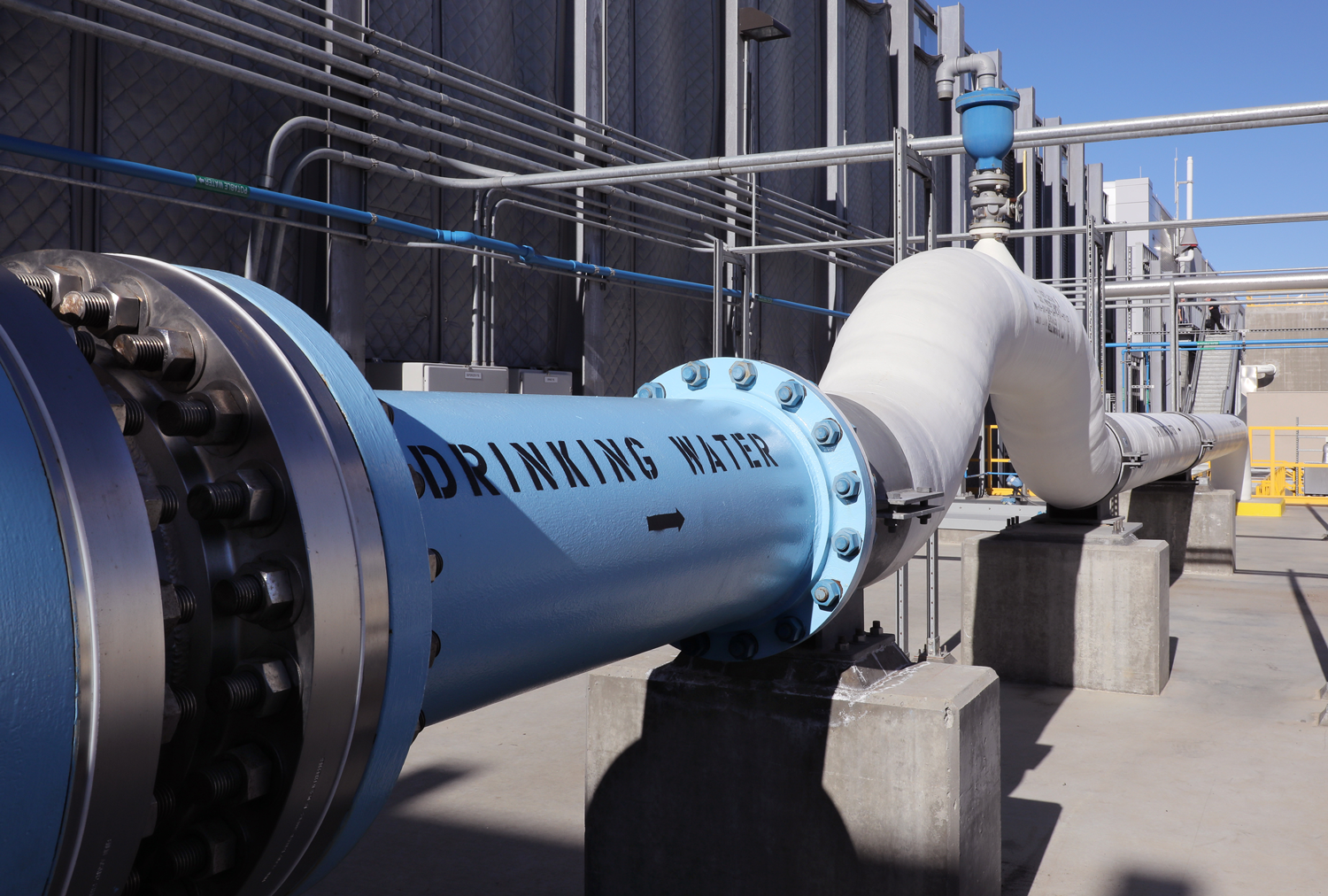
The Claude "Bud" Lewis Carlsbad Desalination Plant is an important drought-resilient water supply for the San Diego region. 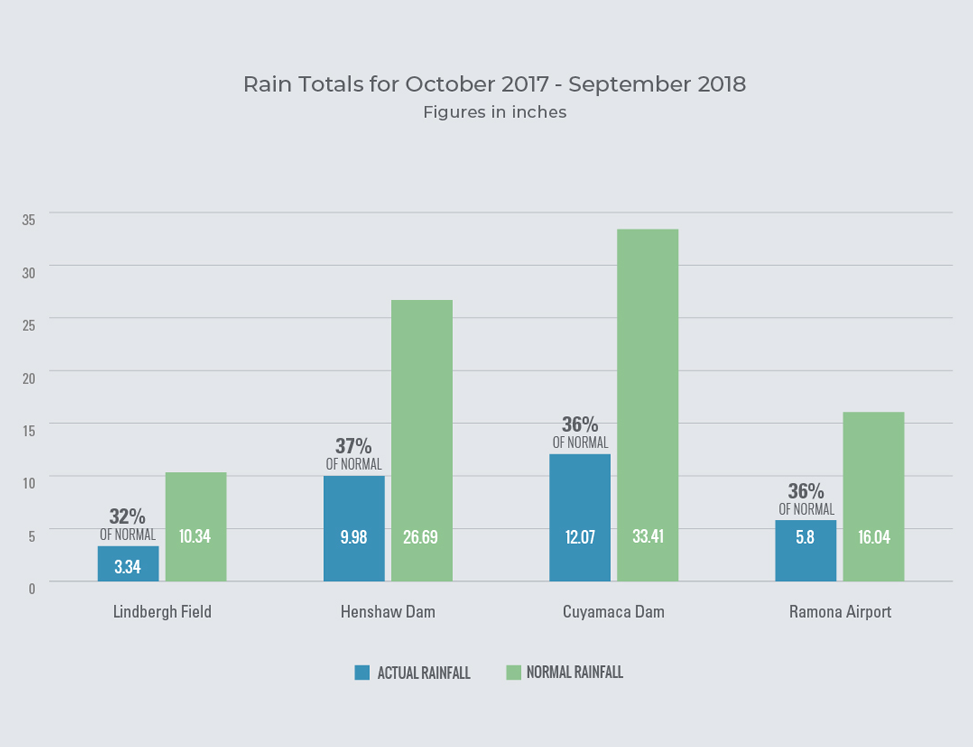
-
Agency Locks Up Long-Term Deliveries of Conserved Irrigation Water
At the end of 2017, the Water Authority Board extended its Exchange Agreement with MWD for an additional decade, ensuring deliveries of high-priority water conserved by the Imperial Irrigation District as part of the Colorado River Quantification Settlement Agreement (QSA) of 2003. With its Board action in December, the Water Authority secured transportation of 2 million acre-feet of conserved Colorado River water from IID to the San Diego region between 2037 and 2047. In 2018, about 22 percent of the water used in San Diego County was from the conservation-and-transfer agreement with IID, which is delivered to San Diego through the Exchange Agreement with MWD. IID has senior water rights on the Colorado River, making the IID transfers highly valuable and reliable even in an era of decreased flows in the Colorado Basin. In addition, the Water Authority has a 110-year agreement as part of the QSA for about 80,000 acre-feet of conserved water delivered annually from canal lining projects in the California desert.
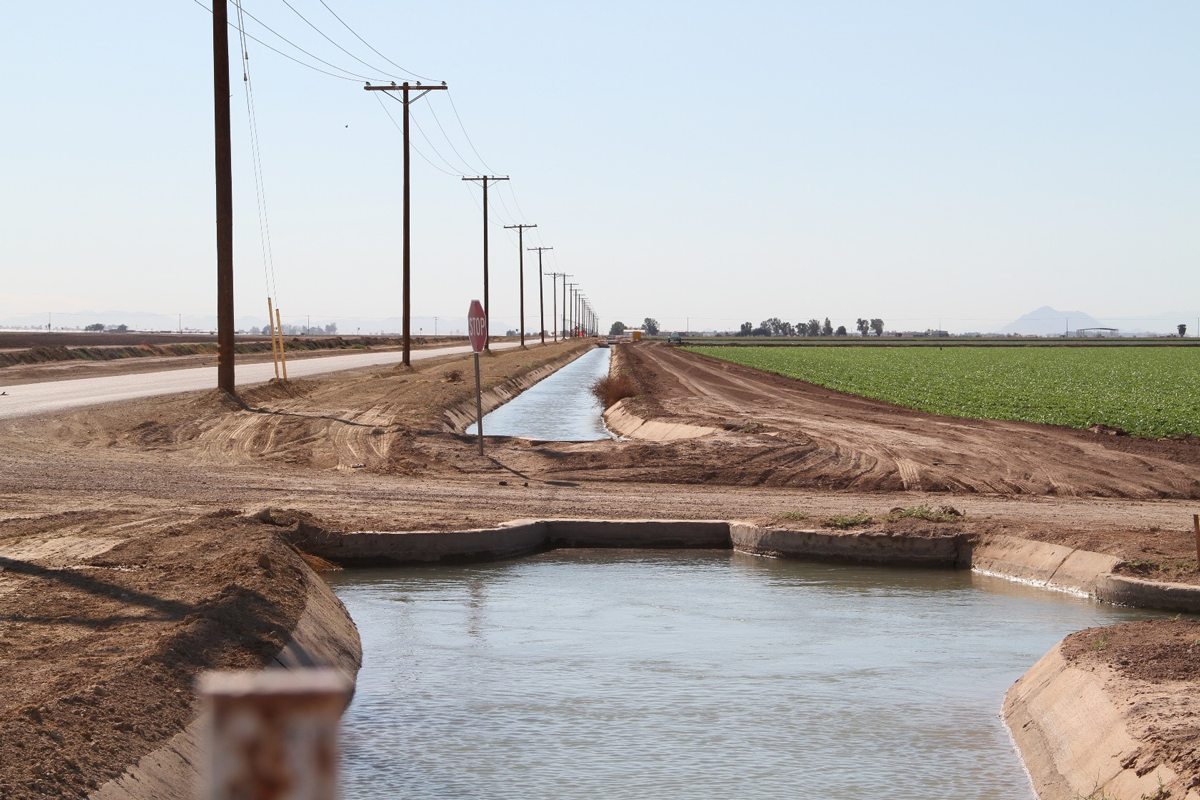
In 2018, about 22 percent of the water used in San Diego County was from the Water Authority's historic 2003 conservation-and-transfer agreement with the Imperial Irrigation District. -
Demand Forecast Declines Due to Regional Efficiencies
Sustained commitment to water-use efficiency across the San Diego region prompted the Water Authority to lower long-term regional water-use projections ahead of its upcoming update of the agency’s Urban Water Management Plan in 2020. The Water Authority now projects 537,000 acre-feet of regional water demand in 2020, instead of 588,000 acre-feet – a 9 percent reduction. Projections for 2040 also have been cut from 719,000 acre-feet to 655,000 acre-feet. The revised demand forecast highlights how the region continues to align with state mandates for water-use efficiency even after nearly three decades of significant savings. Per capita potable water use in the Water Authority’s service area declined by nearly half between fiscal years 1990 and 2018. The “interim demand reset” also is good news because it signals the potential for lower spending on water supply development and delivery in coming decades compared to previous forecasts.
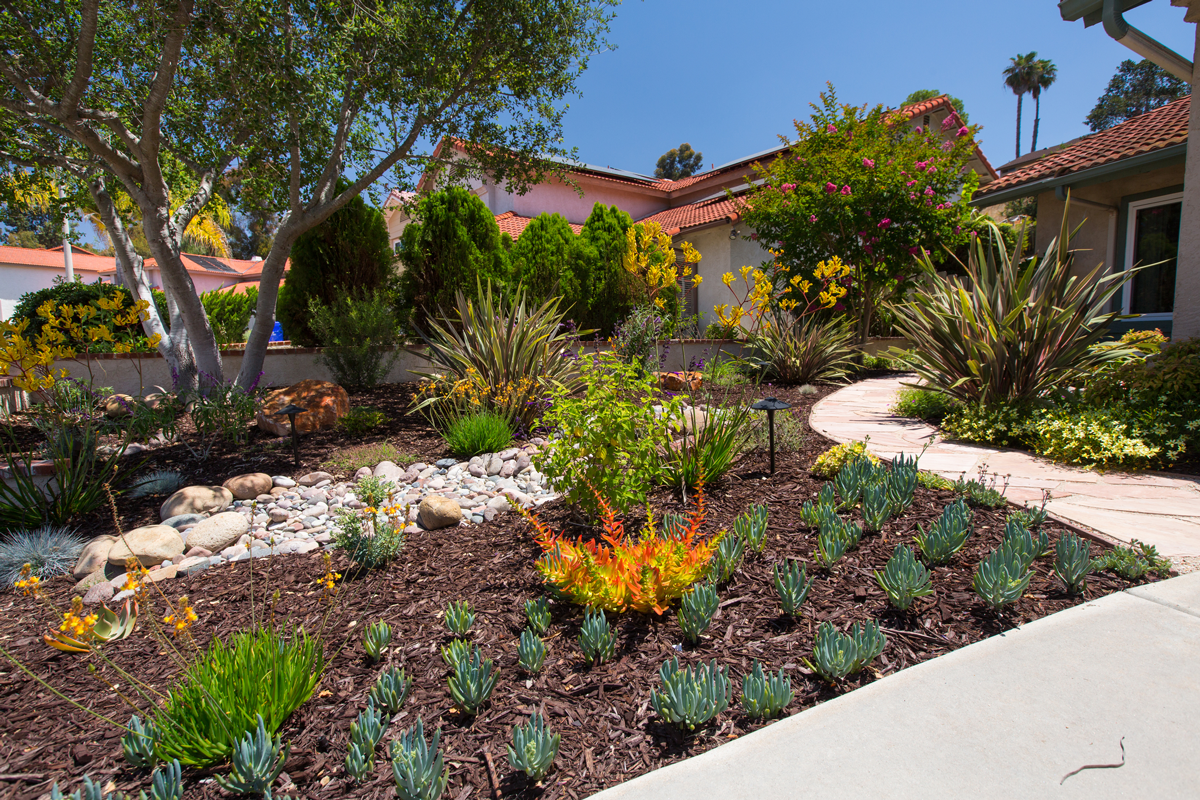
Future water-use in the San Diego region is expected to decline compared to earlier projections in part because of the widespread adoption of WaterSmart landscapes. -
Agency Enhances Drought-Response Plans
Preparing for the unlikely event of future water shortages in the San Diego region took another step forward in August, when the Water Authority’s Board of Directors adopted an update to the agency’s planning document for long-term drought conditions. The refined and renamed Water Shortage Contingency Plan outlines a series of orderly, progressive steps for the Water Authority to take during water supply shortages with the goal of minimizing impacts to the regional economy and quality of life. The prior version of the plan, known as the Water Shortage and Drought Response Plan, was created in 2012. The new plan incorporates lessons from the 2012-2016 drought. It includes a section on catastrophic water shortage planning, guidelines for managing carryover storage, procedures for an annual water supply reliability analysis, and updates to the Water Authority’s drought communication plan.
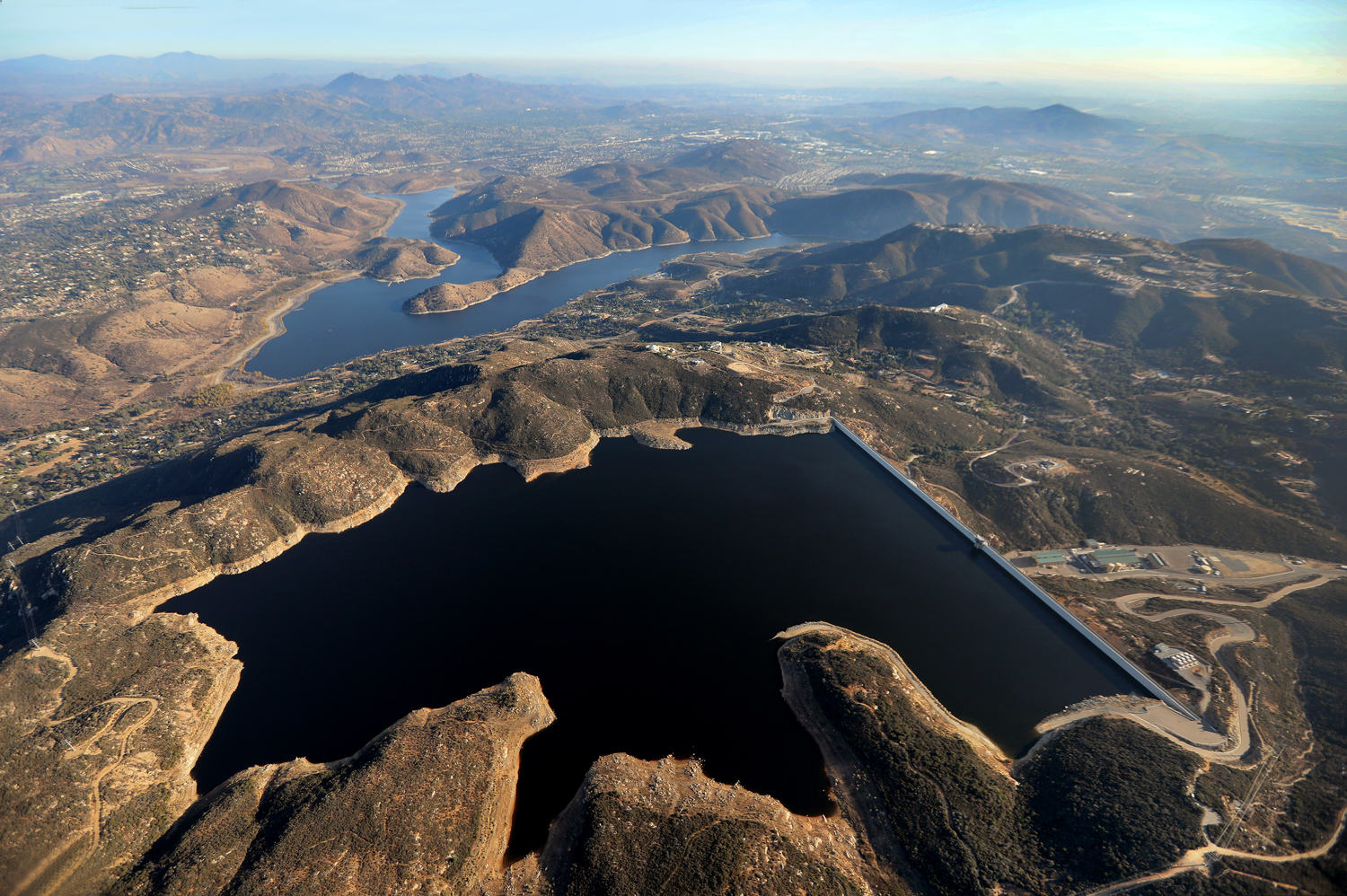
Olivenhain Reservoir in the hills west of Escondido is a key component of the Water Authority's Emergency & Carryover Storage Project. -
Sustainable Landscape Garden Showcases Best Practices
An environmentally friendly, 3,000-square-foot garden at the Water Authority’s Kearny Mesa headquarters was unveiled in September to showcase sustainable landscaping practices for the public. The Sustainable Landscaping Demonstration Garden employs best practices such as climate-appropriate plants and high-efficiency irrigation. It also reduces stormwater runoff by integrating design elements to capture rainwater and amend the soil. The garden embodies the recommendations of the San Diego Sustainable Landscapes Program, or SLP, a public-private partnership among the Water Authority and the City of San Diego, County of San Diego, Association of Compost Producers, Surfrider Foundation, and California American Water. In 2015, the SLP produced the 71-page guidebook, “San Diego Sustainable Landscape Guidelines” which helps property owners put the concepts into practice. The garden was funded through a California Department of Water Resources Integrated Regional Water Management Program grant and additional donations from San Diego Gas & Electric.
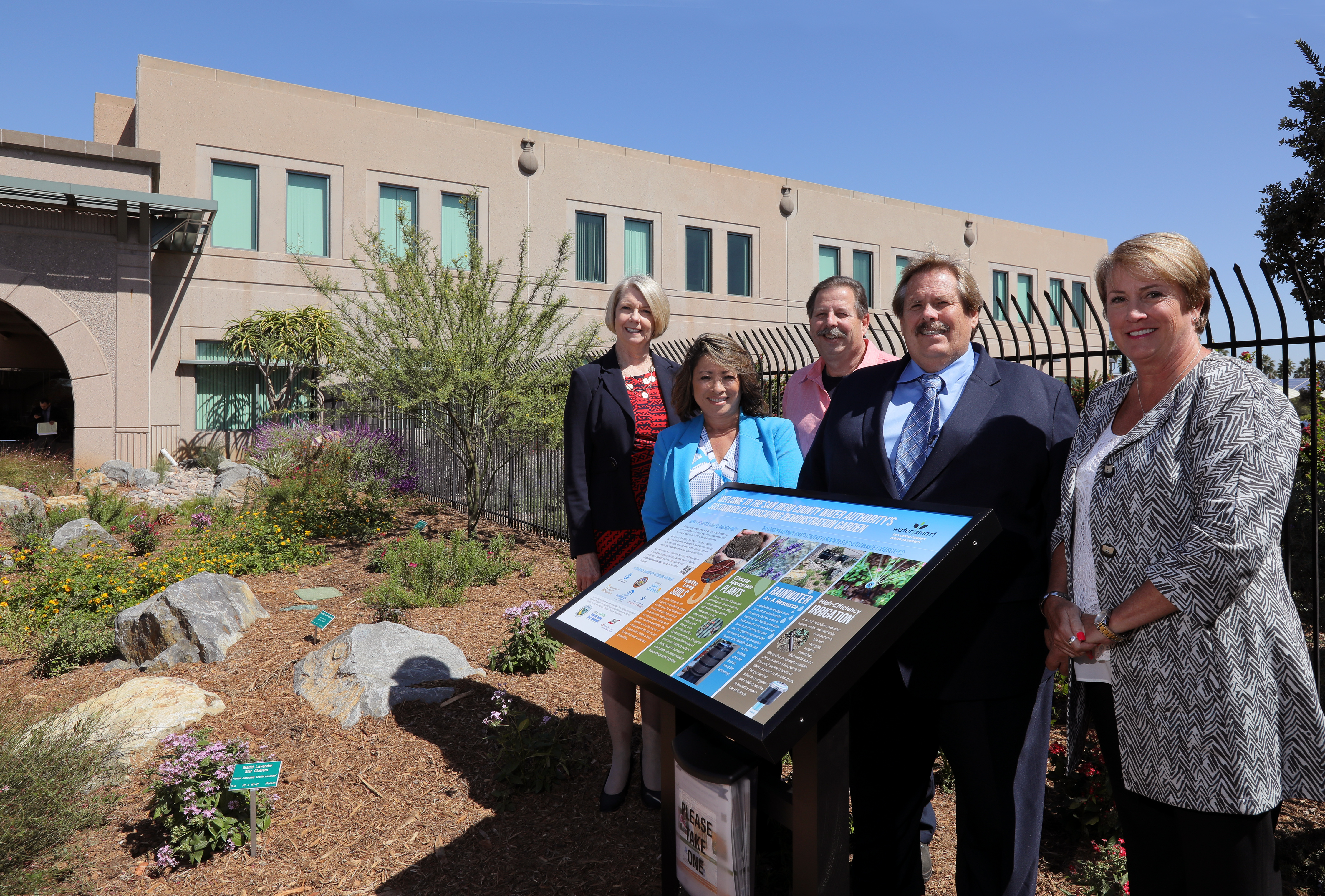
The Sustainable Landscaping Demonstration Garden in front of the Water Authority's Kearny Mesa headquarters provides residents an up-close look at environmentally friendly landscaping plants and practices. -
WaterSmart Landscape Makeover Program Earns Award
The Water Authority’s WaterSmart Landscape Makeover Program won a prestigious “Silver Bernays Award of Excellence” in the public service campaign category from the San Diego-Imperial Counties Chapter of the Public Relations Society of America in October. WaterSmart is the Water Authority’s flagship program for a wide variety of conservation efforts, including replacing lawns with low-water landscapes. The Water Authority offers free classes, workshops and extensive online resources. The WaterSmart Landscape Makeover Series includes four in-person classes for homeowners who have identified an existing turf area for removal and have a functional, in-ground irrigation system. Class subjects include a watershed approach to landscaping and efficient irrigation.

The award-winning WaterSmart Landscape Makeover Program offers free training and resources for homeowners. -
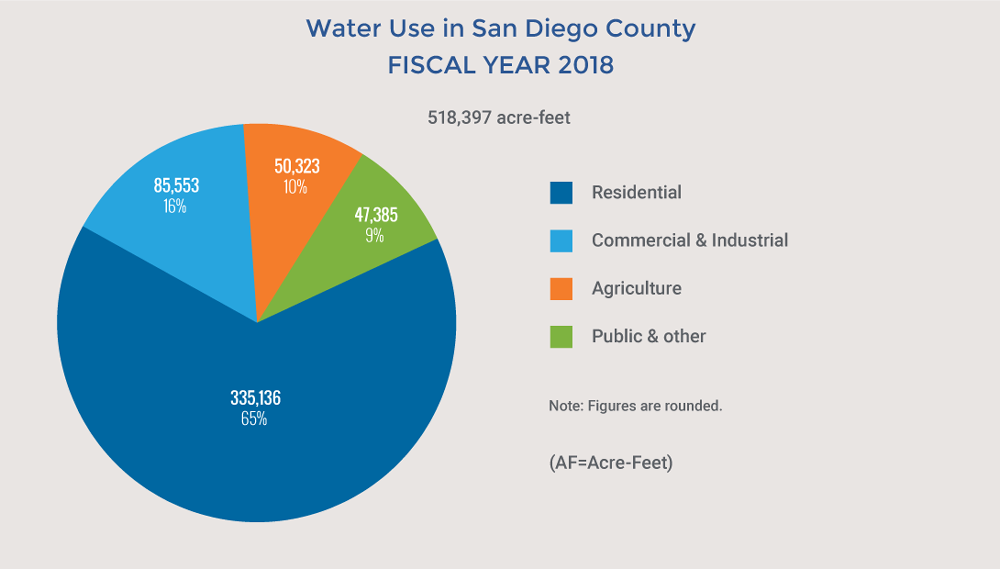
Water Sources and Uses
Water Sources And Uses
Fiscal Year 2018
Compilation of data furnished by member agencies
Source of Water Member Agency Local Supply1 (Acre-feet) Water Authority Supply2 (Acre-feet) Total (Acre-feet) Type of Water Authority Supply Agricultural Use3 (Acre-feet) M&I Use (Acre-feet) Gross Area (Acres) Estimated Population Carlsbad M.W.D. 6,746.6 13,779.7 20,526.3 - 13,779.7 20,682.0 88,422 Del Mar, City of 116.8 1,077.6 1,194.4 - 1,077.6 1,442.0 4,297 Escondido, City of 12,495.1 9,525.6 22,020.7 1,897.1 7,628.5 18,500.0 137,941 Fallbrook P.U.D. 824.0 10,006.5 10,830.5 2,971.2 7,035.3 27,988.0 35,000 Helix W.D. 4,544.7 25,712.6 30,257.3 - 25,712.6 31,350.0 274,526 Lakeside W.D. 812.1 2,838.5 3,650.6 - 2,838.5 11,488.0 35,500 National City, City of 5,004.6 245.8 5,250.4 - 245.8 4,812.4 60,160 Oceanside, City of 2,460.3 22,509.5 24,969.8 310.4 22,199.1 26,982.5 176,461 Olivenhain M.W.D. 2,838.8 19,432.3 22,271.1 104.3 19,328.0 30,942.1 86,607 Otay W.D. 4,156.4 29,637.9 33,794.3 - 29,637.9 80,320.0 225,164 Padre Dam M.W.D. 731.8 10,321.1 11,052.9 159.1 10,162.0 54,402.2 90,529 Camp Pendleton4 7,392.0 188.2 7,580.2 - 188.2 134,625.0 64,000 Poway, City of 666.9 10,230.9 10,897.8 46.8 10,184.1 25,047.0 49,972 Rainbow M.W.D. - 19,240.4 19,240.4 8,807.0 10,433.4 47,670.0 19,944 Ramona M.W.D. 707.9 4,871.7 5,579.6 1,034.1 3,837.6 45,868.0 40,000 Rincon Del Diablo M.W.D. 2,744.5 5,468.3 8,212.8 31.7 5,436.6 10,596.1 29,955 San Diego, City of5 29,468.5 152,192.9 181,661.4 152.3 152,040.6 213,121.0 1,406,318 San Dieguito W.D. 4,211.6 2,659.7 6,871.3 - 2,659.7 5,659.8 37,794 Santa Fe I.D. 5,203.6 5,818.6 11,022.2 - 5,818.6 10,359.0 19,800 South Bay I.D. 10,418.3 1,709.4 12,127.7 - 1,709.4 13,836.9 130,520 Vallecitos W.D. 3,500.0 12,634.3 16,134.3 900.9 11,733.4 28,363.0 104,356 Valley Center M.W.D. 378.7 22,526.2 22,904.9 14,606.8 7,919.4 64,540.0 25,717 Vista I.D. 13,875.0 4,156.0 18,031.0 28.1 4,127.9 21,151.6 133,286 Yuima M.W.D. 6,227.1 6,087.7 12,314.8 4,646.5 1,441.2 13,460.0 1,870 Totals6 125,525.3 392,871.4 518,396.7 35,696.3 357,175.1 943,206.6 3,278,139 - 1 Includes surface, recycled, groundwater and seawater desalination supplies; does not reflect conserved water.
- 2 Water use in a given year may differ from Water Authority water sales due to utilization of storage.
- 3 Includes only amounts certified through the Special Agricultural Water Rate (SAWR) discounted agricultural water-use program.
- 4 Includes Water Authority deliveries via South Coast Water District system.
- 5 Excludes City of San Diego local surface water use outside of Water Authority service area.
- 6 Numbers may not total due to rounding.